The Journey of Wikipedia Editors
The first kind of change in perspective was one from denial to acceptance with accumulating reports from mainstream media. For long-time followers and fans of a man of fame, they could underestimate evidence of sexual misconduct of the individuals they admire to keep intact their images. “Sexual misconduct section has no place here – all allegations have been through the grapevine and there are no first-hand accounts.” On September 19th, 2017, a Wikipedia editor with the username IAmTylerSanders (IATS) left the comment on the history page of Louis C.K., a comedian and television personality, after deleting the “sexual misconduct allegations” section of C.K.’s page. The section contained C.K.’s response to a New York Times interview with regard to sexual misconduct. At this point, questions about Louis C.K.’s misconduct were bubbling up from blogs to television shows.
IAmTylerSanders was a frequent editor for personalities in the entertainment industry. Though with a humble description of himself as simply “human being” on his personal Wikipedia user page, IAmTylerSanders has made over 5,000 edits for 1240 pages, contributing to pages from Woody Allen to Harry Styles, with Louis C.K. being his most edited page. IATS was a fan of C.K.. His edits traced C.K.’s interest in filmmaking as early as when he was 17 years old and recorded his secret shooting of “I Love You, Daddy” in 2016.
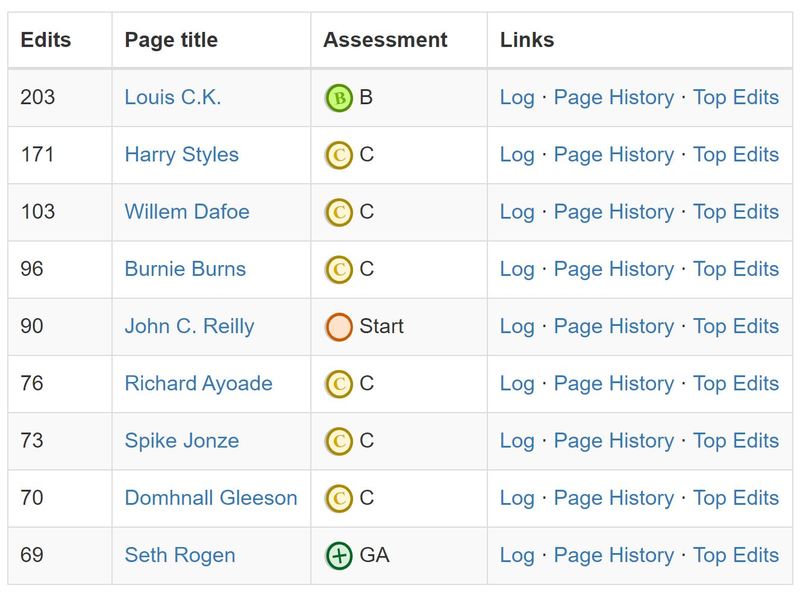
Though IATS initially dismissed reports about C.K.’s sexual misconduct, he eventually contributed full paragraphs to reflect the backlash of C.K.’s exposure since November 9, when C.K. lost his production role with FX. Unlike previous denials about reports that inferred C.K.’s sexual misconduct, IATS’ new edits had concrete details about C.K.’s behavior. “Goodman and Wolov claim C.K. invited them to his hotel room, where he began to masturbate in front of them after asking for permission; the duo initially thought he was joking.” IATS wrote. He even revisited an event he previously dismissed– comedian Tig Notaro’s questioning of C.K. – and included its progression in his edits. He also added content about the canceled premiere of “I Love You, Daddy” due to C.K.’s sexual misconduct.
The progression of edits of IAmTylerSander illustrates one way that high profile events affect individuals’ opinion: they provide a strong source of evidence to change individuals’ ideas, which subsequently materialize into the public discourse on Wikipedia.
* * *
The other form of high profile events’ influence is that they capture the attention of individuals who otherwise are marginally interested in the subject matter and engage them in the public conversation online. This is visible in the edit history of Harvey Weinstein’s Wikipedia page. Two high-contribution editors, Sandstein and Philip Cross, both usernames, edited Weinstein’s Wikipedia pages only after the news broke out on October 5 of 2017, showing newly found attention for the movie producer.
Philip Cross was based in the United Kingdom and a frequent contributor of Wikipedia articles related with “biography, film, international politics, jazz, literature, and the media”, which rendered their familiarity with Harvey Weinstein not a surprise. However, before Philip Cross endeavored on editing Harvey Weinstein’s Wikipedia pages on October 5, he was mainly contributing to pages related with European politicians and actors such as Ian Duncan Smith, the former British Secretary of State for Work and Pension, and Anne Wiazemsky, a French actress. On the day that the New York Times broke the Harvey Weinstein story, Philip Cross first made edits in the “legal problems” session of Weinstein’s Wikipedia page, adding content from the New York Times about his confession of sexual assault. In the next 10 days, he made 47 subsequent edits, mostly in the section of “sexual assault allegations”. In the last few edits, he also contributed to related sections such as Weinstein’s depiction in media and alleged plagiarism.
Sandstein, an administrator of the English language Wikipedia, shared a similar path. Though the editor with most contributions to Harvey Weinstein’s page in the dataset, with 76 edits, Sandstein had not edited the page until after Weinstein’s disposal. Similar to Philip Cross, he most frequently edited the section about Weinstein’s sexual assaults and did minor changes to sections such as personal life and honors[4].